Search This Blog

Saturday, January 22, 2022

The Pug

 pug


The Pug is a small, stocky, square, thickset dog. The round head is massive with a short, blunt, square-shaped muzzle. Moles on the cheeks are considered beauty spots. The teeth meet in a slight undershot bite. The very large, prominent eyes are dark. The small, thin ears are either rose or button shaped. The face has large, deep wrinkles. The high-set tail is curled over the back and a double curl is preferred in the show ring. Dewclaws are usually removed. The short coat is soft, fine and smooth. Coat colors come in apricot, fawn, black and silver.
The Pug's comical face, with deep wrinkles around big, dark eyes and a flat round face, can't help but make you smile. It is believed that the Pug's name comes from the Latin word for "fist" because his face resembles a human fist.
Pugs are clowns at heart, but they carry themselves with dignity. Pugs are playful dogs, ready and able for games, but they are also lovers, and must be close to their humans. Pugs love to be the center of attention, and are heartsick if ignored.


black pug
Pugs are square and thickset, usually weighing no more than 20 pounds. Their heads are large and round, with large, round eyes. They have deep and distinct wrinkles on their faces. Legend has it that the Chinese, who mastered the breeding of this dog, prized these wrinkles because they resembled good luck symbols in their language. Especially prized were dogs with wrinkles that seemed to form the letters for the word "prince" in Chinese.
The moles on a Pug's cheeks are called "beauty spots." His muzzle or mask is black, with a clearly defined "thumb mark" on the forehead and a black trace down the center of the back. His ears are smooth, black and velvety. He has a characteristic undershot jaw (the lower teeth extend slightly beyond the upper teeth) and a tightly curled tail.


Care

Coat care for the Pug is minimal, requiring only occasional brushing to remove the dog's dead hair. Meanwhile, regular cleaning and drying is necessary to prevent skin infections, especially in the dog's facial wrinkles.
As far as exercise requirements, the Pug's needs can be met daily with a moderate leash-led walk or an energetic game. Sensitive to humidity and heat, the Pug should be kept indoors. The breed is also prone to snoring and wheezing because of their flat, small muzzles.


Physical Chacacteristics

The Pug’s attentive and soft expression is its distinguishing feature. Its coat, which is fawn and black in color, is short, fine, and smooth. A compact and square-proportioned dog, the Pug moves with a jaunty and strong gait; its hindquarters roll slightly. The Pug also has clearly defined black markings on its muzzle, ears, cheeks and forehead, which has deep and huge wrinkles.

Personality and Temperament

The Pug is a playful, confident, and friendly companion that magnificently combines comedy with dignity. It is usually pleasant and willing to please, but it can be headstrong and adamant at times. The breed is also known to frolic and flaunt about.

Health

Pugs catch colds easily and are stressed by hot and cold weather. They are prone to allergies and the short muzzle contributes to chronic breathing problems, making the Pug tend to wheeze and snore. (Pugs suffer from poor ventilation.) Prone to skin problems. Prone to mast cell tumors. Prone to Pug Dog Encephalitis (PDE), an inflammation of the brain that strikes adolescent Pugs usually between the ages of 2 and 3. The cause is unknown.
They are not the easiest whelpers. Dams usually have to have cesarean sections due to the size of the pups’ heads.
There is a chance of Keratitis (inflammation of the cornea) and ulcers on the cornea. Eyes are prone to

weeping and cherry eye. Do not overfeed a Pug, as they will eat more than is good for them, quickly becoming obese and living much shorter lives.
The Pug has a lifespan of 12 to 15 years and is prone to major health problems like Pug Dog Encephalitis (PDE) and canine hip dysplasia (CHD), as well as minor concerns like elongated palate, patellar luxation, stenotic nares, Legg-Perthes disease, entropion, keratoconjunctivitis sicca (KCS), hemivertebra, obesity, and skin infections. Nerve degeneration, demodicosis, seizures, distichiasis, and allergies are occasionally seen in this breed of dog.


Other Breed Names

Carlin
Mops 
Chinese Pug Dog
Carlin 
Dutch Bulldog
Dutch Mastiff


History and Background

Multum in Parvo, meaning "a lot in a little," is the official motto of the Pug and sums up its description. The Pug has had various names throughout the years, including Mopshond in Holland, Chinese or Dutch Pug in England, and Mops in Germany. But the word “pug” is thought to have come from the Latin pugnus, meaning fist and attributed to its clenched fist-like head, or from the 18th-century marmoset "pug" monkey, which purportedly appeared quite similar to the dog.
Pugs originated in China, dating back to the Han dynasty (B.C. 206 to A.D. 200). Some historians believe they are related to the Tibetan Mastiff. They were prized by the Emperors of China and lived in luxurious accommodations, sometimes even being guarded by soldiers.
Pugs are one of three types of short-nosed dogs that are known to have been bred by the Chinese: the Lion dog, the Pekingese, and the Lo-sze, which was the ancient Pug. Some think that the famous "Foo Dogs" of China are representations of the ancient Pug. Evidence of Pug-like dogs has been found in ancient Tibet and Japan.

In the latter 1500s and early 1600s, China began trading with European countries. Reportedly, the first Pugs brought to Europe came with the Dutch traders, who named the breed Mopshond, a name still used today.
Although its exact ancestry is not known, many consider the Pug as one of the first breeds miniaturized in Asia. China is the earliest known source of the breed, where Buddhist monasteries of Tibet favored the Pug as a pet. The Chinese considered the Pug's facial wrinkles an important feature of the breed, referring to it as the "prince mark" because of its similarity to the Chinese figure for prince.
Brought to Holland by the Dutch East India Trading Company, a pug would become a pet to William I, the Prince of Orange in the mid 16th century. The Pug was also bestowed the position of the House of Orange official dog after one of its kind saved the life of William I by alarming him to the approach of an upcoming attack of Spaniards at Hermingny in 1572. Later, when William II landed at Torbay to be crowned King of England, his cortege included pugs, making the breed fashionable for generations.

By 1790, the Pug had made its way to France. Most notably used by Josephine, wife of Napoleon, her pug, "Fortune," carried secret messages under his collar to Napoleon while she was confined in Les Carmes prison.

In England, the Pug gained popularity during the Victorian era. These pugs sported cropped ears, which further enhanced their wrinkled expressions. And in 1885, the American Kennel Club would recognize the Pug. Since then, the Pug has become not only a popular show dog, but a wonderful family pet.

Monday, January 17, 2022

Climate Change Will Affect These Dog Breeds


Certain canine varieties are more in danger with regards to environmental change. Another review led by Scientific Reports dissects information to figure out which breeds experienced most in high temperatures, and their weakness factors.
The beyond five years have been the most smoking on record, and canines, similar to people, can experience unfavorable impacts and sickness when temperatures climb. As indicated by Bloomberg, no less than 395 canines in the U.K. gotten veterinary consideration for heat-related ailments in 2016, which was the most blazing year around the world. Of those ailments detailed, 56 canines passed on, making for a 14% death rate.

Logical Reports' review locales three fundamental danger factors that compared with heat sickness and demise: weight, age and skull life structures.

The investigation discovered that canines gauging in excess of 110 pounds are more defenseless against heat pressure, and those 12 years of age and more established were considerably more in danger than some other age bunch. Age and weight are immense powerlessness factors for people in high temperatures too.
Breed-wise, thoroughbred canines are by and large more at helpless, particularly canines with level appearances and wide skulls, similar to English bulldogs and arrogant King Charles spaniels, which are two times as prone to turn out to be sick in blistering climate contrasted with beagles, line collies and different canines with longer noses.


Different variables that assumed a part in heat sickness incorporate coat thickness and muscle proportion.
As indicated by the review, brilliant retrievers are 2.7 occasions almost certain than labradors to experience the ill effects of hotness related sickness "notwithstanding being of comparative size, disposition and reason." This might be because of brilliant retrievers' thicker coat.
Greyhounds were found to have 4.3 more noteworthy defenselessness to warm than labradors. Jan Hoole, an instructor in science at Keele University, however not associated with the review, disclosed to Bloomberg that greyhounds have a high proportion of muscle and might be leaned to run even on the most sweltering days. High proportion of muscle has been displayed to have relationship with more serious danger of heatstroke in the wake of working out.


"Canines will be impacted by environmental change in extraordinarily comparative ways to people going ahead," said Emily Hall, the review's lead creator, who is a senior instructor at Nottingham Trent University. "At the point when we contemplate alleviating methodologies to shield people from heat, we will have to think about canines similarly."


Environmental change acts different dangers for canines like well. As indicated by an article distributed last year by USA Today, environmental change is playing a component in a more extensive appropriation of infections, for example, Rocky Mountain spotted fever, heartworm and Lyme sickness, everything sicknesses which can cause ailment and passing in canines. Ascends in Lyme infection and Rocky Mountain spotted fever can be attached to warming environments and lifts in tick and mosquito populace, while expanding catastrophic events can assume a part in appropriating heartworm all through various pieces of the country as canines are moved from one state to another to be taken on.


Sunday, January 16, 2022

The “DON’TS” of Cold Weather Dog


Try not to go after the razor


Your canine's feathery coat is something beyond a style explanation it shields her from brutal breezes and severe temps. This ought to be obvious, however don't shave your canine throughout the colder time of year. The ASPCA prescribes essentially managing long-haired canines to stay away from the development of ice and salt that can stick to their hide.

Try not to wash your canine (to an extreme) in winter


Piggybacking on the last point, we bring you "don't" # 2: if there's anything you can do about it, skip shower time throughout the colder time of year. Energetic washing will just add to awkward, flaky skin. Assuming, nonetheless, your canine has gotten into a truly sloppy circumstance that main a shower can settle, search for a saturating cleanser and wash.


DON’T leave your dog outside


Sure, some dogs were bred to endure winter weather (we’re lookin’ at you, Siberian huskies.) But when the mercury dips below freezing, no dog should be left outside.
If, for whatever reason, your dog spends a significant amount of time outside in the winter, protect him with an shelter that features the following:

A raised floor, covered with straw
A doorway, covered with waterproof burlap or plastic
Make sure it’s dry and draft-free
Make it small to hold in body heat

Try not to let your canine be in a vehicle


We as a whole know the risks of leaving a canine in a vehicle throughout the mid year, yet did you know it's similarly unsafe to keep him in a vehicle throughout the colder time of year? At the point when it's virus out, a vehicle will behave like a fridge, freezing everything left inside. Try not to chance your canine's wellbeing on the off chance that you want to get things done, keep her home.
Try not to hazard your canine's wellbeing in a dangerous situation
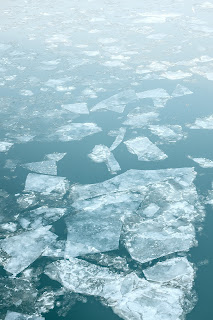
Try not to walk your canine close to frozen lakes or lakes, which may not be thick to the point of bearing her weight. On the off chance that she gets through the ice, she's in danger of suffocating and hypothermia.