Search This Blog

Sunday, January 16, 2022

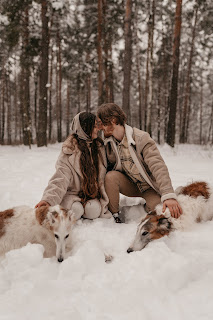
The “DON’TS” of Cold Weather Dog


Try not to go after the razor


Your canine's feathery coat is something beyond a style explanation it shields her from brutal breezes and severe temps. This ought to be obvious, however don't shave your canine throughout the colder time of year. The ASPCA prescribes essentially managing long-haired canines to stay away from the development of ice and salt that can stick to their hide.

Try not to wash your canine (to an extreme) in winter


Piggybacking on the last point, we bring you "don't" # 2: if there's anything you can do about it, skip shower time throughout the colder time of year. Energetic washing will just add to awkward, flaky skin. Assuming, nonetheless, your canine has gotten into a truly sloppy circumstance that main a shower can settle, search for a saturating cleanser and wash.


DON’T leave your dog outside


Sure, some dogs were bred to endure winter weather (we’re lookin’ at you, Siberian huskies.) But when the mercury dips below freezing, no dog should be left outside.
If, for whatever reason, your dog spends a significant amount of time outside in the winter, protect him with an shelter that features the following:

A raised floor, covered with straw
A doorway, covered with waterproof burlap or plastic
Make sure it’s dry and draft-free
Make it small to hold in body heat

Try not to let your canine be in a vehicle


We as a whole know the risks of leaving a canine in a vehicle throughout the mid year, yet did you know it's similarly unsafe to keep him in a vehicle throughout the colder time of year? At the point when it's virus out, a vehicle will behave like a fridge, freezing everything left inside. Try not to chance your canine's wellbeing on the off chance that you want to get things done, keep her home.
Try not to hazard your canine's wellbeing in a dangerous situation
Try not to walk your canine close to frozen lakes or lakes, which may not be thick to the point of bearing her weight. On the off chance that she gets through the ice, she's in danger of suffocating and hypothermia.


Saturday, January 15, 2022

The “DO’S” of Cold Weather Safety Dog

For pet people who live in colder environments, winter can introduce a few genuine difficulties. From blinding whiteouts to unsafe ice fixes, your canine has a great deal to fight with while overcoming the components during this season.
Your canine is relying on you to keep her safe, so it's essential to ask yourself-would you say you are doing all that you can to keep your canine sound and glad this colder time of year?
We've gathered together some chilly climate security tips to assist you with addressing that inquiry. Look and see which practices you've effectively taken on, and which ones you really want to deal with.


DO humidify your home


You're not by any means the only one tormented with crocodile skin in the colder time of year as the moistness outside dives and we consistently wrench up our heaters, your canine may likewise encounter dry and bothersome skin. To keep him (and yourself!) agreeable, The ASPCA proposes running a humidifier in your home during the dryer months.

One more method for combatting flaky, dried out skin is to serve your canine enhancements or treats wealthy in unsaturated fats. This choice gives a characteristic method for reducing your canine's dry skin while keeping up with the soundness of his jacket. Converse with your vet about ways of bringing these fats into your canine's eating regimen.
Despite the fact that our canines' paws are intended to endure pressure, there's as yet a breaking point on the amount they can deal with. It's important that pet people give additional consideration to their canine's feet in the cold weather months.


There are multiple ways you can do this:

Make it a propensity to wash and dry your canine's feet (and stomach, in the meantime) after each walk. Take unique consideration to eliminate any ice or salt that is sticking to her paws or in the middle of her toes.
After you've cleaned them, inspect your canine's paw cushions, looking out for breaks, redness, or dying.
Use petrol jam or paw security wax to give a boundary between your canine's feet and the frozen ground. All the more a DIY-er? The American Kennel Club offers this instructional exercise for a basic paw emollient you can make on your burner.
Assuming your canine will endure them, booties are an incredible choice. They go quite far towards ensuring destroyed paws, and they're past delightful. Shared benefit.
Stash child wipes in your pocket during winter strolls. You can utilize them to clear off stinging walkway salt.
In outrageous climate, you might have to abbreviate your day by day strolls. Fido will excuse you, I guarantee!
Likewise, focus on your canine's conduct: assuming that he's leaning toward one paw, or trying not to put weight on it, it's an ideal opportunity to head inside.


DO utilize pet-accommodating items


One simple method for ensuring your canine's paws: ditch brutal walkway salt, which can cause significant aggravation. Select paw-accommodating ice liquefies, all things considered.

Something else to be aware of is your vehicle's liquid catalyst. Pets are attracted to its sweet taste, however this stuff is exceptionally harmful. Assuming you have a spill, wipe it up right away. You might even need to consider utilizing a more secure kind of liquid catalyst that contains propylene glycol rather than the more hurtful compound, ethylene glycol.

DO adjust your canine's calorie consumption


The virus is a not kidding energy-sapper. Furthermore since her body will be consuming more calories to keep itself warm, your puppy might require more food throughout the colder time of year. Your vet can assist you with deciding whether an additional a scoop of kibbles is really smart.
At the point when chilly climate strikes, there's nothing similar to casings into a comfortable bed. Also your canine concurs! Ensure she has a warm spot to rest, and toss down additional covers for her to tunnel in. A warmed canine bed is one more astounding arrangement there's a scope of styles to suit each canine's exceptional inclination.
On the off chance that you have a short-haired canine, it's brilliant to package her in a sweater or coat prior to heading outside (once more, assuming she'll endure it). Get your hands on something like two, so you'll forever have a dry sweater when it's an ideal opportunity to go out.


DO affirm that your canine's ID tag is cutting-edge


At the point when natural fragrances are covered underneath a layer of ice and snow, a lost canine will think that it is hard to follow his direction back home. Forestall this despair by guaranteeing her collar is secure and her label information is current and neat. What's more assuming she's not microchipped yet-get on that ASAP.


Wednesday, January 12, 2022

Dogs - Physical traits and functions - General characteristics - Teeth - Digestive machine - Skeletal structure

 Physical traits and functions

General characteristics

Dogs come in a wide range of shapes and sizes. It is difficult to imagine that a large Great Dane and a tiny poodle are of the same species, but they are genetically identical with the same anatomic features. All dogs have 78 chromosomes, or 39 pairs of chromosomes (humans have 23 pairs), and one member of each pair comes from each parent. The normal temperature (rectal) of an adult dog is 100–102.5 °F.


Teeth

Dogs have  units of tooth. Twenty-8 deciduous tooth erupt through six to 8 weeks of age, and by the time puppies are six to seven months antique these deciduous tooth are all replaced by means of 42 adult tooth. The permanent tooth encompass incisors, that are used to nip and bite; canine, which tear and shred flesh; and premolars and molars, which shear and overwhelm. In brief, a dog’s teeth function guns and as equipment for reducing or tearing food. The dogs are the top and decrease fangs for which the dog circle of relatives became named. As in most carnivores, the enamel are excessive-topped and pointed, unlike the vast, grinding teeth of many herbivorous animals.


The teething procedure can be tough for dogs. Their gums harm and emerge as swollen, they may lose their appetites, and they may have mild intermittent diarrhea.


Digestive machine

Dogs rarely chew their food. Once the meals is taken into the mouth, it is gulped or swallowed and handed thru the esophagus into the belly, wherein digestive enzymes begin to interrupt it down. Most of the digestion and absorption of meals takes area in the small intestines with the resource of the pancreas and the liver. The pancreas secretes enzymes wanted for regulating the digestive manner. As in human beings, the pancreas produces insulin and glucagon, both of which can be essential for the law of glucose. The liver is the biggest internal organ inside the body. It has six lobes (whereas the human liver has most effective two). The liver is chargeable for many crucial life-retaining capabilities. It facilitates digestion by way of generating bile, which aids in the absorption of fats. The liver additionally metabolizes protein and carbohydrates, and it excretes toxins from the bloodstream. In addition, it manufactures most important blood-clotting marketers. Because the liver plays all these vital functions, liver ailment may be a first-rate trouble in puppies.


Skeletal structure

Dogs are running animals, with the exception of these bred specially for one of a kind functions. For instance, the bulldog, with its huge head and short, “bowed” legs, cannot be called a creature born to chase recreation. Most dogs, however, are properly prepared to run or lope over long distances, supplied that they may be physically conditioned for such activities. The creation of the shoulder and pelvic bones and the manner they articulate with the leg bones and the backbone allow most breeds to trot, run, or gallop without difficulty. Certain breeds have wonderful gaits which have been genetically selected via humans. The German shepherd canine is thought for its “flying trot.” The severe extension of the the front and rear legs causes the canine to appear as if it had been soaring, even though one foot always remains at the floor. Another unique gait is that of the greyhound. This dog become bred for superb bursts of velocity, and its maximum secure gait is the gallop. The spine is unusually flexible, permitting the dog to contract and extend its four legs in unison, wherein all 4 feet are off the ground on the identical time.


Other breeds also have particular functions. The Afghan hound become bred to chase sport over lengthy distances in rocky terrain. Its structure lets in incredible flexibility via the hip joints and decrease lower back, permitting the canine to turn speedy in a small region. The dachshund, through comparison, is lengthy and occasional with quick legs. This dog turned into bred to seek badgers underground, and its shape allows it to enter subterranean tunnels on the lookout for its prey.


Although most breeds no longer follow the pursuits for which they were originally bred, their instincts remain strong, and their structure still allows them to perform their specific tasks.