Why Does My Dog Stare at You? What That Look Really Means
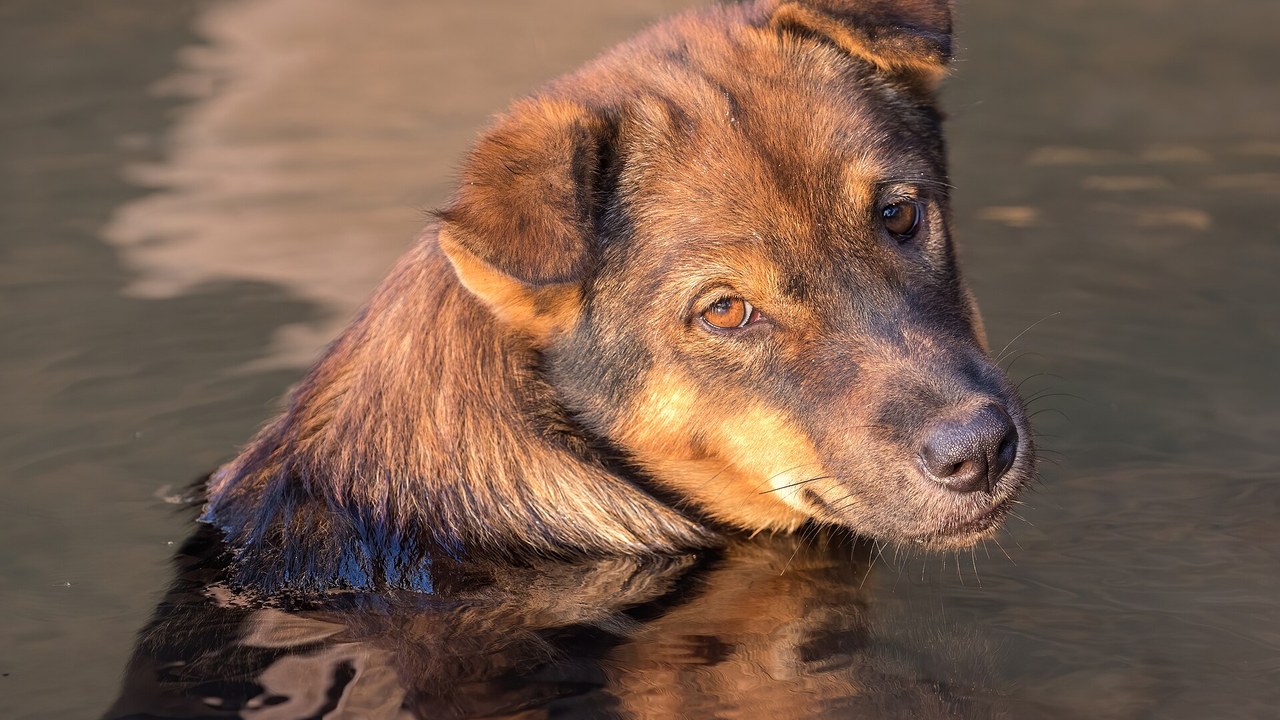
Some dogs stare as if they are trying to have a conversation. Others lock on with an intensity that feels uncomfortable, especially from a dog you do not know. Owners often read the stare as guilt, judgment, or pure love, and usually they are guessing. In reality a stare is one of the clearest signals a dog gives, and it only makes sense read alongside the rest of the body — the eyes, the mouth, the tail, the muscles.
This guide covers what the science says about mutual gaze, the common types of stare and what each means, and the two situations where a stare needs a different response: a warning, and a sudden change in an older dog. If you are still learning how dogs signal, our guide to what dog sounds mean pairs well with it.
The science: mutual gaze releases the bonding hormone
Research has shown that when a dog and its owner hold eye contact, both experience a rise in oxytocin, the same hormone involved in the bond between a parent and baby. In one well-known study, dogs who gazed at their owners had higher oxytocin levels than dogs that did not, and so did the owners. It is a two-way loop: the gaze builds the bond, and the bond invites the gaze. That is why the stare from a dog you love genuinely feels like affection — chemically, it is.
The flip side is that a hard, sustained stare from a dog that does not love you is not affection at all. In dog language a prolonged unbroken stare is a challenge or a warning, which is why children and adults are taught not to stare back at a strange dog.
| Stare style | What it usually means | What to do |
|---|---|---|
| Soft eyes, slow blink, relaxed face | Affection and trust | Blink back and relax |
| Fixed look at food or your hand | Anticipation, wanting a reward | Ask for a sit first, then reward |
| Hard stare, stiff body, still tail | A warning; he is uncomfortable | Give space, do not stare back |
| Whites of the eyes, lip lick, yawn | Stress or anxiety | Remove the pressure, let him disengage |
| Staring, then looking away repeatedly | Unsure, seeking your cue | Give a clear, calm direction |
| Intense stare at movement | Herding instinct (the eye) | Redirect to a job or task |
Read the whole body, not just the eyes
A stare is only one channel. A soft, blinking eye in a wiggly dog means something completely different from the same gaze in a rigid one. Handlers read the combination: a dog showing the whites of its eyes (whale eye), licking its lips, yawning, or turning its head away is stressed and asking for space. A dog that stiffens, lowers its head, fixes its gaze and goes still is warning you to stop. The AKC and veterinary behaviorists are consistent on this: context and posture decide whether a stare is affection or a threat.
Some breeds also simply stare more. Herding breeds were built to control livestock with an intense, fixed look known as "the eye." A Border Collie fixing its gaze on movement is doing the job it was bred for — which is why Collies and Border Collies can seem to stare through you. It is instinct, not dominance, and it needs a legal outlet such as a job, a sport, or a structured task.
When a stare is new, see your vet
Sudden or unusual staring deserves attention, especially in a senior dog. A dog that stares at a wall or into a corner, seems confused, or paces at night may have canine cognitive dysfunction — the dog version of dementia — which your veterinarian can help manage. A dog that has become clingy and stares at you more than usual may be in pain or losing vision; dogs with failing sight often rely more on watching their owner. Cataracts and other eye problems are common in older dogs. Any change in a long-standing habit is worth a check rather than a guess.
What to do with a stare you do not want
Do not punish it. Punishing a dog for staring — especially during training or when the dog is anxious — adds pressure and can make the problem worse, including the hard stare you were trying to stop. Instead, teach a clear release cue such as "okay" or "all done" so the dog knows the waiting has ended, reward calm disengagement, and give the dog something to do with its attention. With unfamiliar dogs, keep it polite: let the dog choose to approach, avoid long direct eye contact, and let the dog look away first.
Quick check
A stiff dog locks an unbroken stare at your visiting friend, body still and tail held high. What does it mean?
The bottom line
A stare from your own dog, with soft eyes and a relaxed body, is affection and connection — and it measurably strengthens your bond. The same look in a stiff, strange dog is a warning to respect. Read the whole body, give a stressed dog space, give a herding dog a job, and ask your vet about any sudden change in an older dog. The stare is communication; your job is to answer it correctly.
Keep Reading
Sources — AKC - Why Does My Dog Stare at Me?
AKC - Dog Body Language
AKC - How to Read Your Dog's Body Language
ASPCA - Common Dog Behavior Issues
AVMA - Pet Care
About Animalix — About us • Contact us
Comments
Post a Comment