Leopard geckos can live 15 to 20 years with correct heat, calcium and substrate. This 2026 guide covers the husbandry and diet that extend healthy lifespan.
Clinical Key Takeaways
- Leopard geckos live 10 to 20 years in captivity with correct husbandry.
- A proper heat gradient and UVB are the two most important setup factors.
- Never house two leopard geckos together; they are solitary and may injure each other.
- Tail loss is a stress response and the regrown tail never looks the same.
- Annual vet checks and a varied live-insect diet prevent most disease.
Advertisement

A leopard gecko is not a short-term pet. A healthy captive animal commonly reaches fifteen to twenty years, and some go beyond that. Anyone buying a hatchling is signing up for a relationship that will outlast most phone contracts, several house moves, and probably a couple of jobs. That is the first thing to understand about lifespan: it is mostly a measure of husbandry, not of luck.
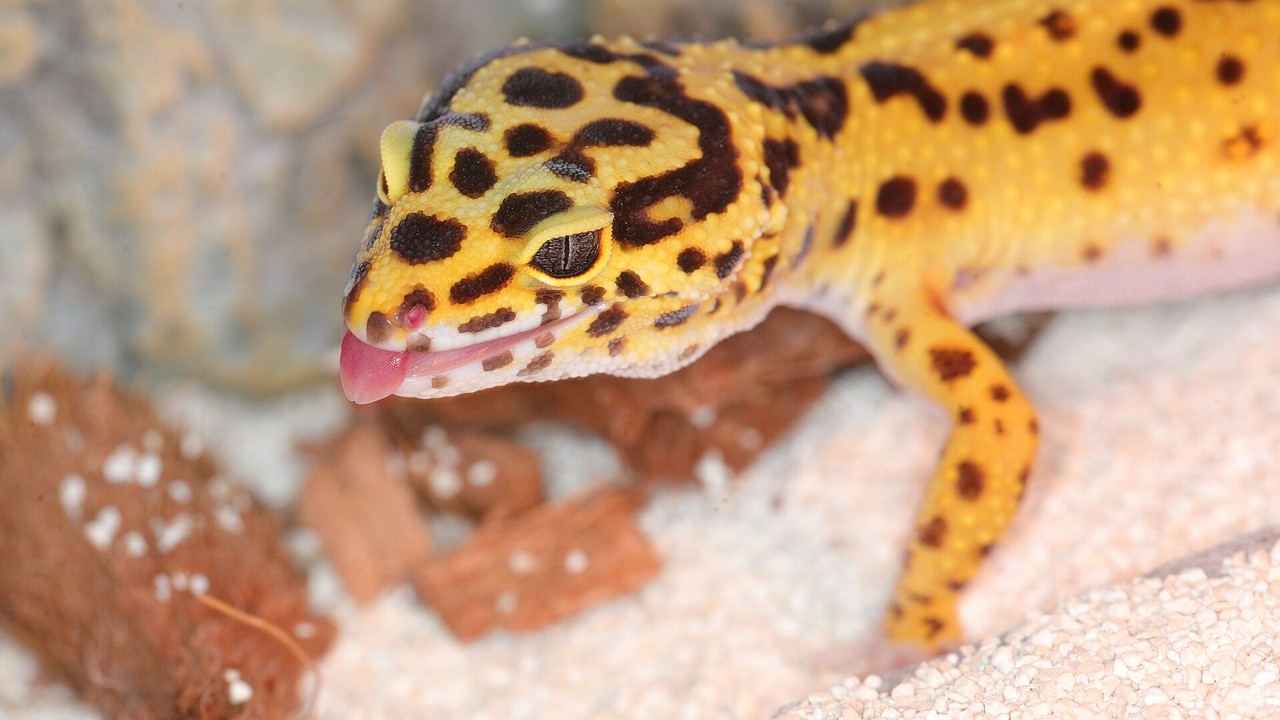
In the wild, most leopard geckos never see old age. Predators, drought, and parasites keep the average short. In captivity, the animal has no predators and no drought, so the two things that shorten life are the two things the keeper controls: temperature and nutrition.
What Actually Shortens a Leopard Gecko's Life
Metabolic bone disease is the most common preventable killer. It comes from a lack of usable calcium, usually because there is no UVB and no adequate supplementation. The bones soften, the jaw turns rubbery, and the gecko stops being able to hunt. It is slow, painful, and entirely avoidable.
Impaction is the second. Loose substrate swallowed during a missed strike or a hunting lunge can block the gut. Calcium sand is the worst offender because geckos deliberately eat it. Paper towel, slate tile, or a safe solid substrate removes the risk entirely.
Chronic dehydration and poor shedding are the third and fourth. A gecko that cannot shed its toes or tail tip loses digits. A gecko with no humid hide struggles at every shed for its whole life.
Heat: A Gradient, Not a Hot Spot
Leopard geckos are crepuscular, but they still need a temperature gradient to digest food and regulate themselves. The Merck Veterinary Manual gives the general reptile rule: basking temperatures should sit about five degrees Celsius above the ambient range, and at night they should fall by about five degrees.
In practice, that means a warm zone near 30 to 32 degrees Celsius on the floor above a heat mat or a low-wattage lamp, a cool zone around 24 to 26 degrees, and a night drop of a few degrees. Belly heat matters more than air heat for this species, because digestion happens on contact with warm ground. A thermostat is not optional. An unregulated heat mat can cook a gecko overnight.
UVB: The Detail Most Care Sheets Skip
Leopard geckos are nocturnal-ish, so the old advice was that they need no UVB. That advice is outdated. Merck notes that UVB in the 290 to 300 nanometre range is especially important for most diurnal lizards and chelonians for vitamin D3 synthesis and calcium regulation, and that even suitable fluorescent tubes must sit relatively close to the animal, under 30 centimeters or 12 inches, and be replaced every nine to twelve months.
That replacement interval matters more than most keepers realize. A UVB tube keeps glowing long after its useful output has collapsed, so a two-year-old bulb looks fine and does nothing. Write the install date on the tube. A low-output forest-strength tube, mounted at the correct distance with a screen-free path, is a sensible compromise for a crepuscular species.
Natural sunlight is the best source of all. Merck notes that just one to two hours a week of unfiltered natural sunlight can have dramatic positive effects, which is why a secure outdoor enclosure in shade, never through glass, is worth the effort in warm weather.
The Enclosure
An adult needs at least 90 by 45 by 45 centimeters, with more floor space being better than more height. Three hides are the minimum: a warm dry hide over the heat, a cool hide, and a humid hide with damp sphagnum moss for shedding. Add a shallow water dish and a calcium dish, and keep the layout stable. Geckos use routine as a security system.
Glass aquariums with mesh tops work. Front-opening wooden vivaria work better for taming, because reaching in from above reads as a predator. Whatever you choose, put the thermostat probe where the gecko actually sits, not where the cable is convenient.
Advertisement
Diet and Supplementation
Leopard geckos are insectivores. Crickets, dubia roaches, and mealworms form the base, with waxworms as an occasional treat and nothing more. Insects should be gut-loaded for at least twenty-four hours before feeding and dusted with calcium on most feeds, with a vitamin and D3 product on a sensible schedule that matches your UVB setup.
Feed juveniles daily and adults every two to three days. Remove uneaten insects, because crickets bite sleeping geckos. Watch the tail: a healthy tail is thick at the base, and a shrinking tail is the earliest visible sign that something is wrong.
Health Checks and Red Flags
- Sunken eyes or loose skin mean dehydration
- Rubbery jaw or curved spine means metabolic bone disease
- Stuck shed on toes or tail tip needs a soak today, not next week
- Refusing food for more than a week in a warm enclosure needs investigation
- Regurgitation, lethargy, or weight loss despite eating suggests parasites or cryptosporidiosis
Cryptosporidiosis has no reliable cure and spreads between animals, so any new gecko should be quarantined for at least ninety days with its own equipment. That single habit prevents the most heartbreaking scenario in the hobby.
What a Twenty-Year Commitment Costs
Longevity has a budget attached. A UVB tube replaced every nine to twelve months, a thermostat, electricity for heat around the clock, live feeders, calcium and vitamin powders, and a reptile-safe vet fund all add up over two decades. The gecko itself is usually the cheapest part.
It is also worth planning for the boring scenarios: a power cut in winter, a holiday where nobody wants to feed live insects, a house move. A gecko that lives twenty years will outlast the setup you bought first, the substrate fashion of the moment, and probably the shop that sold it to you.
Find an exotics vet before you need one. Reptile medicine is a specialty, and an emergency is the worst time to discover that the nearest qualified clinician is two hours away.
Frequently Asked Questions
How long do leopard geckos live in captivity?
Most well-kept leopard geckos reach fifteen to twenty years, and some live beyond that. Lifespan depends far more on temperature gradient, UVB and calcium, and safe substrate than on genetics, because metabolic bone disease and impaction are the two main preventable causes of early death.
Do leopard geckos need a UVB light?
They benefit from one. The Merck Veterinary Manual notes that UVB in the 290 to 300 nanometre range supports vitamin D3 synthesis and calcium regulation, that tubes must sit within about 30 centimeters of the animal, and that they should be replaced every nine to twelve months even if they still light up.
What temperature should a leopard gecko enclosure be?
Aim for a floor-level warm zone around 30 to 32 degrees Celsius, a cool zone around 24 to 26 degrees, and a small drop at night. Merck describes the general reptile rule as basking about five degrees warmer than ambient, falling about five degrees after dark. Always run heat through a thermostat.
Advertisement
Care by Life Stage
| Stage | Need | Cost 2026 |
|---|
| Juvenile | Heat + calcium | $100 setup |
| Adult | UVB + insects | $30 / month |
| Senior | Vet checks | $80 / visit |
Scientific Evidence
The guidance in this article is based on the following official veterinary sources.
Association of Reptilian and Amphibian Veterinarians
Merck Veterinary Manual
American Veterinary Medical Association
Explore the Reptile & Amphibian Care Hub